
If your business is bidding on a construction project, applying for a professional license, entering into a government contract or working in an industry with specific regulatory requirements, you may be asked to obtain a surety bond.
Surety bonds are common in construction and contracting, but they are not limited to contractors. Depending on the business, bonds may also be required for motor vehicle dealers, mortgage lenders, certain professionals, government officials and other businesses that need to demonstrate they will comply with contractual or regulatory obligations.
For businesses in Springfield, Urbana and throughout Ohio, understanding when a surety bond is required – and what it actually does – can help prevent delays, avoid missed bidding opportunities and make it easier to take on larger projects.
What Is a Surety Bond?
A surety bond is a three-party agreement designed to guarantee that a business or individual will fulfill a specific obligation.
The three parties are:
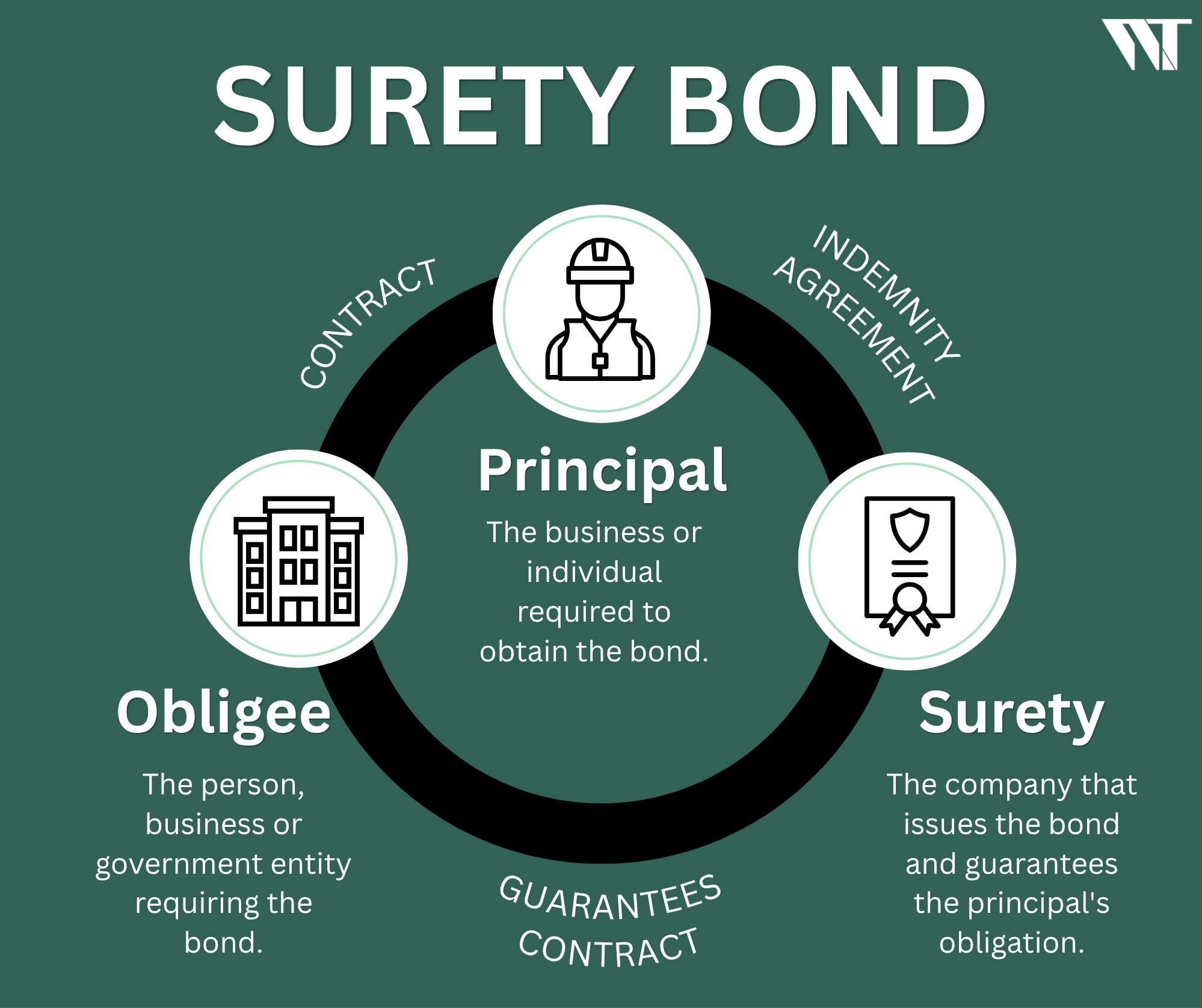
Principal: The business or individual required to obtain the bond.
Obligee: The person, business or government entity requiring the bond.
Surety: The company that issues the bond and guarantees the principal's obligation.
For example, a construction company in Springfield may be required by a project owner to obtain a performance bond before beginning a $1 million project. The contractor is the principal, the project owner is the obligee, and the surety company provides the guarantee.
Importantly, a surety bond is not the same thing as traditional insurance. With insurance, the insurer generally assumes the covered risk. A surety bond primarily protects the obligee if the principal fails to meet its obligation. If the surety pays a valid claim, the contractor or other principal may ultimately be responsible for reimbursing the surety.
That distinction is important for business owners considering their bonding needs.
Who Needs a Surety Bond?
There is no single type of business that needs a surety bond. Bond requirements generally come from one of three sources: a contract, a law or regulation, or a licensing authority.
Contractors and Construction Companies
Construction is one of the most common areas where businesses encounter surety bonds.
As Wallace & Turner Vice President & Partner Otto Larson explained in an interview with Fortune, contractors and construction companies are commonly asked to post bonds when working on medium and large projects. Owners and general contractors may require bonds to provide assurance that a project will be completed and that subcontractors and suppliers will be paid.
For contractors in Springfield, Urbana, Clark County, Champaign County and surrounding communities, bonding can become particularly important when pursuing:
Public construction projects
School and municipal projects
Road, bridge and infrastructure work
Commercial construction
Large private development projects
General contracting and subcontracting opportunities
A contractor may encounter several types of bonds during the life of a project.
Bid Bonds
A bid bond provides assurance that a contractor submitting a bid will honor the bid and, if awarded the project, enter into the contract and provide the required additional bonding.
Bid bonds can be especially important for contractors pursuing public work. Ohio law establishes specific bid-guaranty requirements for public improvements. Under current Ohio Revised Code Section 153.54, bidders for covered public improvements generally must submit a bid guaranty, which may include a bond for the full amount of the bid or certain other permitted forms of security.
That means bonding should be considered before a contractor submits a bid, not after winning the job.
Performance Bonds
A performance bond guarantees the contractor's performance under the contract.
If a contractor fails to perform according to the contract, the bond provides protection to the project owner, subject to the terms and conditions of the bond.
Performance bonds are commonly required on public projects and may also be required by private owners or general contractors on larger or higher-risk projects.
Payment Bonds
A payment bond protects certain subcontractors, laborers and material suppliers by guaranteeing payment for qualifying work and materials.
For Ohio public improvement projects, state law establishes specific requirements governing payment-bond claims, including deadlines and notice requirements. This is one reason contractors and subcontractors should understand the specific bond and contract documents involved rather than assuming all bonds operate the same way.
Maintenance and Other Contract Bonds
Some projects require additional bonds, including maintenance bonds, which can provide assurance concerning defective workmanship or materials for a specified period following completion.
There are also ancillary or specialized bonds designed around particular contractual obligations.
The important point for contractors is that the bond requirement should be reviewed at the beginning of the bidding and contracting process. Waiting until the last minute can create unnecessary problems if underwriting or documentation takes longer than expected.
Ohio Surety Bond Requirements: What Businesses Should Know
Ohio has specific statutory and regulatory bonding requirements in a number of industries.
For public construction, Ohio law establishes requirements governing bid guaranties and bonds for public improvements. Ohio also requires sureties issuing certain public bonds to be authorized to conduct surety business in the state.
The requirements can vary depending on the type of project, the government entity involved and the structure of the contract. For example, Ohio Department of Transportation projects have their own bonding requirements. Under current Ohio law, ODOT generally requires a performance bond and payment bond in amounts equal to 100% of the contract amount.
That makes it important for an Ohio contractor to identify the exact bonding requirements before submitting a bid or signing a contract.
A bond requirement can also arise outside construction.
Motor Vehicle Dealers
Ohio provides a good example of a commercial surety requirement.
Under current Ohio regulations, an applicant for a used motor vehicle dealer license generally must post a $75,000 surety bond with the Ohio Attorney General's Office, subject to certain exceptions. The bond is intended to protect qualifying retail purchasers and must be maintained during the dealer's licensing period.
For a used car dealer, a surety bond may be part of the licensing process rather than something connected to a particular construction project.
Mortgage Lenders and Brokers
Mortgage businesses can also face statutory bonding requirements.
Ohio's Residential Mortgage Lending Act requires covered registrants to maintain a corporate surety bond. The required amount is generally calculated based on the aggregate amount of residential mortgage loans originated, subject to statutory minimums and maximums.
This illustrates an important distinction: some bonds are tied to a particular contract, while others are ongoing requirements associated with operating a regulated business.
Other Businesses and Professionals
Other businesses may encounter bond requirements depending on their licenses, contracts or regulatory obligations. These can include certain:
Professional service providers
Tax-related businesses or professionals
House-cleaning and janitorial businesses
Motor vehicle dealers
Mortgage lenders and brokers
Public officials and fiduciaries
Businesses required to obtain licenses or permits
Not every business in these categories automatically needs a bond. Requirements can depend on the specific license, jurisdiction, business structure and services provided.
That is why it is important to determine which bond is actually required, who requires it and what obligations the bond covers rather than simply purchasing a generic bond.
How Much Does a Surety Bond Cost?
One of the most common questions business owners ask is: How much does a surety bond cost?
There is no universal price.
The premium depends on factors including:
The type of bond
The amount of the bond
The size and complexity of the project
The length of the bond term
The applicant's credit
The company's financial strength
The company's experience
Previous claims or defaults
The surety's assessment of the overall risk
For contract bonds, established contractors with strong financials and a history of successfully completing projects may qualify for more favorable pricing than newer businesses or applicants with financial or credit challenges.
As a general illustration, contract-bond premiums are often calculated as a percentage or rate per $1,000 of the bond amount, with pricing structures that can become more favorable as contract size increases. Actual rates vary substantially, so a percentage quoted for one contractor or bond should not be assumed to apply to another.
For example, a 1% premium on a $500,000 bond would be $5,000, while a 2% premium would be $10,000. But the actual premium could be higher or lower depending on the underwriting circumstances and the type of bond.
For businesses bidding on significant projects, bond cost should be incorporated into the project budget before the bid is submitted.
What Does a Surety Company Look At?
Getting bonded is not simply a matter of paying a fee.
For larger contract bonds, the surety will typically evaluate the business much like a lender evaluates a borrower. The U.S. Small Business Administration describes the traditional surety evaluation around three broad considerations: capital, capacity and character.
Capital
The surety wants to understand the financial strength of the business.
Financial statements, cash flow, working capital, debt, profitability and other financial information may all be relevant.
Capacity
Can the company actually complete the work?
The surety may consider the contractor's experience, personnel, equipment, prior projects, current work in progress and the size and complexity of the proposed project.
Character
The surety also considers the company's track record, management experience and reputation for meeting its obligations.
For contractors seeking to grow, this is particularly important. Establishing a strong bonding relationship can help a business qualify for larger projects and increase its overall bonding capacity over time.
Why Bonding Capacity Matters to Growing Contractors
A contractor's bonding capacity can directly affect the projects it can pursue.
Suppose a contractor has successfully completed $500,000 projects and now wants to compete for a $2 million public project. The contractor may have the technical ability to perform the work, but the project owner may require bonding that exceeds the contractor's current capacity.
Planning ahead can help.
Contractors that expect to grow should discuss their bonding needs before a major opportunity arises. Maintaining strong financial records, demonstrating successful project history and communicating anticipated growth to the surety can all help position a business for future bonding needs.
The SBA's Surety Bond Guarantee Program can also help qualifying small businesses obtain contract bonds when they may otherwise have difficulty meeting a surety's standard underwriting requirements. The program can support bid, performance, payment and ancillary bonds for eligible small businesses.
How Early Should You Apply for a Surety Bond?
The answer depends on the type and size of the bond.
A straightforward license or permit bond may be relatively simple to obtain. A large performance and payment bond for a complex construction project can require substantially more underwriting.
Contractors should therefore avoid treating bonding as a last-minute administrative task.
Before bidding on a project, review:
What bond does the contract require?
What is the required bond amount?
When must the bond be submitted?
What surety company requirements apply?
Will the project affect your existing bonding capacity?
Are there additional bonds required after the bid is awarded?
Getting the process started early can help identify potential issues before they affect a bid or project schedule.
Surety Bonds in Springfield, Urbana and Throughout Ohio
For businesses in Springfield, Urbana and surrounding Ohio communities, surety bonding can be an important part of pursuing new contracts, expanding operations and maintaining required licenses.
Construction companies may need bid, performance and payment bonds to compete for larger public and private projects. Other businesses may need commercial surety bonds as part of a licensing or regulatory requirement.
The right approach depends on the business and the specific obligation. A bond should not be viewed simply as another form to complete. It can affect a contractor's ability to bid on work, a business's ability to obtain or maintain a license, and its capacity to take on larger opportunities.
Where Can Businesses Get a Surety Bond in Ohio?
Wallace & Turner Insurance has served businesses in Springfield, Urbana and throughout Ohio for more than 150 years. As an independent insurance agency, we work with a range of carriers and can help businesses understand their bonding requirements and identify an appropriate surety solution.
If you are bidding on a new project, applying for a license or have been told that your business needs a surety bond, contact Wallace & Turner before the deadline. Starting the process early can help ensure the required bond is in place when you need it.
Disclaimer: This article is provided for informational purposes only and is not intended as insurance, surety, legal or other professional advice. Individual bonding needs and requirements vary. Please consult your surety agent or other qualified professional regarding your specific circumstances.

Otto Larson
Vice President & Partner
With over two decades of experience in the insurance industry, Otto works with both commercial and personal lines clients, helping them to achieve peace of mind while allowing them to focus on what matters most to them each day. See full bio.