
Wallace & Turner Named Best Insurance Agency in Best of Springfield 2026 Awards

12 Fall Home Maintenance Tips to Avoid Filing an Insurance Claim

What Are Surety Bonds and Who Needs Them in Ohio?

Insurance and giving back in Springfield - Patrick Field Featured in Dayton Daily News

Wallace & Turner President Patrick Field
Wallace & Turner President Patrick Field was featured in Dayton Daily News highlighting his personal journey, the agency's rich history and his longstanding commitment to serving the Springfield community and beyond.
The profile traces Patrick’s path from growing up in a family deeply rooted in the insurance industry to initially pursuing a different career before returning to Springfield in 1992 to join Wallace & Turner. Under the mentorship of his father and the agency's leadership, Patrick developed a passion for helping clients and building lasting relationships, ultimately becoming president of the agency and leading its next generation of growth.
Beyond insurance, the story discusses Patrick’s deep commitment to philanthropy and community involvement. Following in the footsteps of his father and grandfather, he has championed numerous local organizations focused on education, food security and community development, while fostering a culture of volunteerism throughout Wallace & Turner.
Read the full Dayton Daily News article to learn more about Patrick's journey, Wallace & Turner's legacy and the importance of giving back. (Subscription may be required)
Adding Your Teen to Your Auto Insurance Policy in Ohio

Patrick Field Crowned Champion of Champions at 15th Annual Bad Art by Good People

Patrick Field and Mike Major
Wallace & Turner President Patrick Field was crowned the winner of the Champaign County Arts Council 15th Anniversary Bad Art by Good People! His masterpiece captured the most votes, and Mike Major purchased the winning piece. Wallace & Turner was also proud to serve as the Diamond Sponsor of the event.
Thanks to the incredible support of our community, the fundraiser set a new record, raising $36,964 to support the arts. We are grateful to everyone who voted, attended and donated.
Bad Art By Good People features non-artist celebrities competing to create a work of art and campaigning for the public's votes for their artwork. All proceeds support Champaign County Arts Council.
Do You Need Swimming Pool Insurance in Ohio?

Catholic Central Features Deece Catanzaro in Alumni Stories
Producer Deece Catanzaro was profiled in Catholic Central’s Alumni Stories, discussing how his time as a student has grown into leadership and service within the Springfield community.
Attending Catholic Central from Pre-K through graduation, Deece was deeply involved in football, basketball and baseball while also serving as a Kairos Leader and Student Body President. Many of his favorite memories were made under the lights on Friday nights and Saturday mornings at Hallinean Field.
Deece credits Catholic Central with connecting him to mentors and alumni who modeled integrity, work ethic, and community leadership, values that continue to guide him today in his career at Wallace & Turner and in giving back to Springfield. Learn more below.


What You Need to Know About Rideshare Insurance – Ben Galbreath Interviewed by Insurance.com

Ben Galbreath
There are millions of Uber, Lyft and DoorDash drivers across the U.S. who use the service to generate full-time or part-time income, and drivers are essentially operating their own small business. This means they need insurance to protect their livelihood and reduce their financial liability. If you're a rideshare or food delivery driver, you should know that your standard personal auto policy only covers your vehicle’s personal use. If you're driving your car for business, you'll need a commercial policy, or some carriers offer a special endorsement to add to a personal auto policy that will close that gap.
"Traditional car insurance is not set up for the liability and medical payments exposure, and the liability a driver exposes himself or herself to while getting paid to transport individuals," commented producer Ben Galbreath.
Galbreath says rideshare drivers should consider their personal assets, such as home, car, bank accounts and investments when thinking about coverage.
"Auto claims have high bodily injury payouts, so medical bills and liability payment could bankrupt individuals if the right type of coverage isn't purchased," he adds.
Galbreath says if you're looking for coverage, you should take the time to compare policies and that you shouldn't base your decision on price alone.
"My advice would be to look into coverage options and pay for what you need to be protected based on your personal liability," he says. "The cost of insurance would not come close to the potential loss a driver could risk personally or professionally."
Continue reading the full article.
Questions about Uber, rideshare or auto insurance? Contact Wallace & Turner at (937) 324-8492 in Springfield, (937) 652-8492 in Urbana, or info@wtins.com.
Automakers Enter Insurance and Complicate the Market – Ben Galbreath Quoted in Insurify & Insurance News Net

Ben Galbreath
Hyundai recently announced plans to launch its own branded insurance carrier, joining companies like Tesla, Honda and General Motors in entering the car insurance business.
The news follows a $9 million multistate settlement Hyundai reached with attorneys general over allegations that Hyundai and Kia sold millions of vehicles without industry-standard anti-theft devices – an issue that led to insurer lawsuits and coverage restrictions after numerous break-ins and thefts.
While automakers claim they designed the move into insurance to improve customer convenience and lower insurance costs, Partner Ben Galbreath told Insurify & Insurance News Net that this adds another layer of complexity for insureds.
"It's going to trigger a significant shift in the personal auto insurance market, and has the potential to complicate things," said Ben. "As more households end up with multiple vehicles insured through different carriers, policies will become more fragmented and complex. That creates challenges not just for consumers, but for traditional carriers and agencies, particularly when it comes to offering umbrella coverage."
Ben explained that umbrella policies typically require underlying auto coverage to meet specific criteria, and automaker-issued policies may not always qualify.
Reinsurers – companies that provide insurance for other insurance companies – may also turn a critical eye toward the trend, he added.
"Reinsurance companies closely evaluate many factors of primary insurers before allowing umbrella coverage to sit over them," Ben said. "As automakers enter the space, reinsurers will need to assess a range of new risk factors, which could further complicate how and when umbrella coverage is offered across different providers."
Ways to Help Reduce Homeowners Insurance Costs in Ohio

Wallace & Turner Sponsors Champion City Half Trax Prospect League Baseball Team
We are thrilled to continue our support of Champion City Half Trax for the upcoming season! The beloved Prospect League baseball team recently transitioned from "Kings" to "Half Trax," honoring Springfield's history of producing half-track military vehicles during WWII.
Mark your calendars for opening day on May 27th! Get more information on the team and schedule here.
The Prospect League is a premier Midwestern wood-bat collegiate summer baseball league with 20 teams across Illinois, Indiana, Iowa, Missouri, Ohio, Tennessee and Pennsylvania. The League provides college players a professional setting with excellent competition and high-quality facilities while delivering exciting baseball action and affordable all-ages entertainment to its communities. Known as the Central Illinois Collegiate League from 1963-2008, the Prospect League has a proud tradition as one of the original and most recognizable summer leagues. The League’s rich history includes Hall of Famers and NCAA Champions, nearly 200 alumni in Major League Baseball, and more than 800 professional players.
2026 Clark County Nash Bash - Wallace & Turner Serves as Gold Sponsor
Wallace & Turner is thrilled to once again support the Clark County Nash Bash as a Gold Sponsor. The annual Nash Bash benefiting the Dolly Parton Imagination Library of Clark County will be held Friday, February 6, 2026, at Hollenbeck Bayley Creative Arts and Conference Center in Springfield. Join for entertainment, good food, bid on wonderful auction items and buy raffle tickets for the ever-popular Bourbon Pull!
Tickets: https://givebutter.com/c/2026NashBash
When: Friday, February 6, 2026
Time: 5:30 PM – 9:00 PM
Where: Hollenbeck Bayley Creative Arts and Conference Center

16th Annual Grapes & Escapes - Partner Otto Larson Chairs Event

It’s Masquerade meets Mardi Gras, and you’re summoned to laissez les bons temps rouler!
Join us for the Springfield Symphony Orchestra’s 16th annual Grapes & Escapes: Masquerade of the French Quarter on February 7 at the Clark State Performing Arts Center.
Partner Otto Larson is co-chairing the event with his wife Therese, which will feature an open bar, New Orleans–inspired menu, and an opportunity to bid on unique “escapes and adventures” during a live auction. When the music calls, step onto the dance floor and celebrate in true festival style as the party takes on a life of its own. 🎭
Tickets: $125 per person
Prefer to sit together? Reserve a table for 10 for $1,100 by calling (937) 325-8100.
Get more information and buy tickets here.
Cold Weather, Hot Risks: Winter Fire Safety Tips for Homeowners
Winter is a season filled with warmth and celebration. But it’s also the time of year when the risk of home fires increases dramatically. According to the National Fire Protection Association (NFPA), home fires peak in December, driven by heating equipment, holiday decorations, candles and electrical hazards. For homeowners, understanding these risks—and knowing how to prevent them—is essential for your safety and protecting your home.
Below is a guide to the most common winter fire hazards and the steps you can take to minimize risk.
Space Heaters: Convenient but High Risk
Space heaters remain one of the top causes of fires. While they provide quick warmth, especially in older homes or drafty rooms, they also pose significant dangers if misused.
Key Space Heater Risks
Too-close proximity to combustibles (curtains, bedding, furniture)
Tipping over, especially older models without automatic shut-off
Overloading electrical outlets
Using extension cords or power strips, which can overheat
Prevention Tips
Follow the three-foot rule: Keep anything flammable at least three feet away.
Use heaters with tip-over protection and overheat sensors.
Plug directly into a wall outlet, never an extension cord.
Turn space heaters off when you leave the room or go to bed.
Inspect cords regularly for cracking or fraying.
Insurance note: Many policies require homeowners to take “reasonable precautions.” Improper use of space heaters may complicate a claim if they were used unsafely.
Chimneys & Fireplaces Require Maintenance
A crackling fire is the essence of winter comfort, but poorly maintained chimneys are a major fire hazard.
Key Fireplace Risks
Creosote buildup inside chimneys, which is highly flammable
Cracked chimney liners that allow heat to reach the home’s structure
Sparks or embers escaping the fireplace
Using improper fuel (e.g., trash, cardboard, plastics)
Prevention Tips
Schedule a professional chimney inspection and cleaning once per year, ideally before winter.
Use a sturdy screen or glass doors to prevent sparks.
Burn only dry, seasoned wood.
Never leave a fire unattended, especially if children or pets are nearby.
Fully extinguish the fire before leaving the house or going to bed.
Insurance note: Having up-to-date chimney inspections can help streamline fire-related claims and demonstrate proper home maintenance.
Christmas Trees: Beautiful but Flammable
A dry Christmas tree can ignite and engulf a living room in seconds. Both real and artificial trees come with risks.
Key Christmas Tree Risks
Dry, brittle needles on natural trees
Faulty lights or overloaded electrical outlets
Candles placed too close to the tree
Portable heaters blowing warm air onto branches
Prevention Tips
For real trees:
Choose a fresh tree with sap and flexible needles.
Water daily. Trees can dry out faster than you think.
Keep the tree at least three feet from heat sources.
For artificial trees:
Look for the label “fire-resistant.”
Avoid placing near fireplaces, radiators or space heaters.
For lighting:
Use UL-listed lights appropriate for indoor use.
Throw away any string lights with frayed wires or broken bulbs.
Turn off all tree lights before bed or leaving the house.
Insurance note: Fires involving Christmas trees can spread rapidly, resulting in extensive property damage and higher claims. Regular watering, safe lighting and heat-source clearance are simple steps that can significantly reduce exposure.
Candles: Small Flames, Big Hazards
Candles contribute to holiday ambiance, but they are a leading cause of winter home fires.
Key Candle Risks
Being left unattended
Placing candles near flammable decorations
Using unstable candle holders
Pets or children knocking candles over
Prevention Tips
Keep candles at least 12 inches away from anything that can burn.
Use sturdy, non-tip holders.
Never leave a burning candle unattended, even for a few minutes.
Consider battery-operated, flameless candles for décor-heavy areas.
Insurance note: If a candle fire occurs while a homeowner was away from the room, insurers may scrutinize the event. Prevention is key.
Holiday Décor & Lights: Festive but Potentially Faulty
From elaborate yard displays to indoor garlands and wreaths, holiday décor brings joy—but also introduces additional electrical and fire risks.
Key Holiday Décor Risks
Overloaded circuits
Old or damaged light strings
Indoor lights used outdoors
Exposed wires near flammable materials
Overheated extension cords
Prevention Tips
Inspect all lights for fraying or broken bulbs.
Don’t connect more strings together than manufacturers recommend.
Use outdoor-rated cords and lights for exterior decorations.
Keep electrical cords away from snow, standing water and walkways.
Turn off all decorations before bed or leaving the home.
Insurance note: Documenting your décor setup and using outdoor-rated equipment helps prevent electrical fires and supports any related insurance claims.
Cooking-Related Fires During the Holidays
Winter holiday cooking—big meals, crowded kitchens and distractions—makes this one of the most common sources of home fires.
Key Cooking Risks
Leaving cooking unattended
Grease fires on stovetops
Overcrowded ovens
Flammable items placed near burners
Prevention Tips
Stay in the kitchen when frying, grilling or broiling.
Keep a lid nearby to smother grease fires—never use water.
Keep flammable objects (towels, pot holders, packaging) away from the stovetop.
Make sure smoke alarms are fully operational before heavy cooking periods.
Insurance note: Many kitchen fires stem from momentary distractions. Active supervision and basic precautions can reduce the likelihood and severity of an insurance claim.
Electrical Overload: More Devices, More Risk
Winter tends to bring more electrical usage—heaters, holiday lights, charging stations and kitchen appliances all converge.
Key Electrical Risks
Overloaded circuits or power strips
Loose electrical connections
Aging wiring in older homes
Damaged cords under rugs or furniture
Prevention Tips
Plug high-wattage appliances directly into wall outlets.
Avoid daisy-chaining power strips.
Look for outlets that feel warm—this is a warning sign.
Upgrade old wiring if you live in an older home.
Insurance note: Electrical issues often cause severe fires with significant claims. Proactive upgrades can reduce risk.
Smoke Alarms & Fire Extinguishers: Your First Line of Defense
Even with the best prevention efforts, accidents can happen. Working smoke alarms and accessible fire extinguishers save lives.
Best Practices
Install smoke alarms on every level of the home, inside bedrooms and hallways.
Test alarms regularly and replace batteries annually.
Replace entire units every 10 years.
Keep a Class ABC fire extinguisher in accessible locations—kitchen, garage, near fireplaces.
Insurance note: Functioning safety devices can help minimize damage and support smoother claims handling.
Protect Your Home and Your Family This Winter
Taking these precautions not only protects your property and loved ones but also demonstrates responsible homeownership. If you have questions about homeowners insurance coverage, the Wallace & Turner team is here to help.
‘Tis the Season for Risk: Winter Hazards That Could Cost Your Business
From holiday decorating and parties to frozen pipes and slick sidewalks, the winter season can create risks that lead to costly claims, disruptions or liability exposure for business owners. The good news: with proper planning, you can significantly reduce wintertime hazards and keep operations running safely and smoothly.
Below is your winter risk management guide, designed to help you safeguard your employees, customers, property and operations.
Holiday Decorating: Festive, Fun—and Potentially Risky
Holiday décor can boost morale and enhance the seasonal atmosphere, but it can also create fire, electrical and safety hazards if not handled correctly.
Common Office Decorating Hazards
Overloaded outlets and power strips
Flammable décor near heat sources
Tripping hazards from cords and lighting
Blocked emergency exits or fire sprinklers
Dry, combustible holiday greenery
Holiday Decor Tips for Businesses
Only use UL-certified commercial-grade lights.
Inspect all cords for damage before installation.
Avoid connecting multiple power strips or extension cords.
Keep all décor at least three feet from heating vents or radiators.
Do not block sprinklers, smoke detectors, or exit routes.
Assign someone to oversee décor safety during the season.
A festive workplace shouldn’t create added risk. A few extra safety steps ensure your team enjoys the season without incident.
Holiday Parties: Reduce Liability While Celebrating Responsibly
Whether on-site or off-site, company holiday parties can expose employers to various liability risks—from alcohol-related incidents to workers’ comp claims.
Top Liability Risks at Company Parties
Over consumption of alcohol by employees.
Harassment or inappropriate behavior.
Slips and falls at event venues.
Employer liability for accidents occurring after the event.
Increased exposure if attendance is perceived as mandatory.
Holiday Party Risk Management Strategies
If serving alcohol, hire trained bartenders and offer plenty of food and non-alcoholic options.
Provide transportation alternatives (rideshare credits, shuttle services).
Reinforce anti-harassment and conduct policies beforehand.
Clearly communicate that attendance is voluntary.
Hold events earlier in the day when excessive drinking is less likely.
Select reputable venues with appropriate liability coverage.
A well-planned party protects both employees and the business while still delivering a memorable celebration.
Winter Weather and Property Protection
Frozen pipes, roof leaks and structural strain from storms are some of the most common winter property claims. Proactive maintenance can save thousands in cleanup, repairs and business interruption.
Frozen Pipes
When temperatures drop, your building’s pipes are at risk.
Prevention Measures
Insulate exposed pipes.
Set thermostats to at least 55°F at all times—even overnight or on weekends.
Allow faucets to drip during extreme cold.
Install smart leak-detection or temperature sensors.
Make sure fire sprinkler systems are properly winterized.
Roof & Gutter Maintenance
Snow, ice dams and freezing rain can cause serious roof damage.
Prevention Measures
Schedule a pre-winter roof inspection.
Clear gutters and drainage systems regularly.
Remove heavy snow buildup safely (using trained professionals).
Inspect seals around skylights, vents and HVAC units.
HVAC Winterization
A failed heating system can shut down operations and lead to pipe issues.
Steps to Prepare
Change filters before cold weather hits.
Have your system inspected by a licensed technician.
Keep backup heating sources available.
Proactive maintenance is far less expensive than repairing winter weather damage.
Slip-and-Fall Hazards: Wet and Icy Walkways
Slip-and-fall injuries are among the most frequent wintertime claims and can cost businesses tens of thousands of dollars. Even one incident involving a customer, vendor or employee can lead to significant liability exposure.
Key Risks
Icy parking lots
Wet lobbies and entryways
Snow tracked onto floors
Poor lighting during shorter daylight hours
Risk-Management Tips
Contract with a reputable snow and ice removal service, and document all services performed.
Place heavy-duty floor mats at every entrance and replace them regularly when saturated.
Use clear signage for slippery areas and maintain regular mop-and-dry rotations in high-traffic areas.
Use slip-resistant floor coatings in areas prone to moisture.
Improve exterior lighting around walkways, parking lots and entry paths.
Train employees to report or address hazards immediately.
Commercial Auto and Fleet Safety
If your business relies on driving—whether for deliveries, service calls or employee travel—winter weather increases accident risk.
Winter Vehicle Safety Steps
Inspect and service all fleet vehicles before the season.
Check tire tread, battery strength, wipers and antifreeze levels.
Equip vehicles with winter kits (blankets, flashlights, ice scrapers).
Train employees on safe winter driving techniques.
Implement a weather travel policy to prevent unnecessary risks.
Review your commercial auto insurance limits and coverages.
Employee Safety and Emergency Preparedness
A safe workforce is essential for business continuity during the winter.
Action Steps for Employers
Allow remote work when weather creates dangerous commuting conditions.
Update emergency plans for winter scenarios, including power outages.
Create a communication plan for office closures or delays.
Conduct safety refreshers for cold-weather hazards, equipment use and emergency procedures.
Stock emergency supplies: blankets, flashlights, batteries, first-aid kits.
Supply Chain and Operational Continuity
Winter storms can trigger unexpected delays, closures, supply shortages or shipping disruptions—all of which can impact business operations.
Continuity Planning Tips
Identify critical suppliers and confirm their winter weather contingency plans.
Carry surplus inventory of essential materials or products.
Create backup plans for shipping and logistics.
Confirm your business interruption coverage is up to date.
Ensure remote systems are secure and accessible in case employees must work off-site.
Operational preparedness ensures your business can continue functioning despite seasonal uncertainties.
Insurance Coverage Review: Close Gaps Before Something Goes Wrong
Winter is an excellent time to review your insurance policies to confirm you’re properly protected heading into the new year.
Coverage Areas to Review
Commercial Property: Fire, water damage, snow/ice damage
General Liability: Slip-and-fall incidents, holiday event exposure
Employment Practices Liability (EPLI): Misconduct at company events
Workers’ Compensation: Winter-related injuries
Commercial Auto: Winter driving risks
Cyber Insurance: Increased online activity and related scams
Business Interruption: Weather-related shutdowns
Winter Doesn’t Have to Mean Increased Risk
With the right preparation and proactive risk management strategies, businesses can stay protected all winter long. Addressing holiday safety, weather-related hazards and the right insurance coverage will help you reduce liabilities and avoid preventable disruptions.
Questions about business insurance? Contact the Wallace & Turner team here.
Don’t Let Thanksgiving Turn Into a Cornucopia of Trouble
Did I put too much salt in the gravy? Will grandma ask me why I’m still single? Will the Bengals beat the Ravens?
These are valid Thanksgiving Day concerns and hopefully the biggest worries you’ll have this holiday. Unfortunately, Thanksgiving can bring up a cornucopia of other troubles, from cooking accidents and injuries, to home and driving safety issues. Below, we’ve outlined a handful of steps you can take to make sure this is one of your most memorable Thanksgivings – for all of the right reasons.
PREVENTING A FIRE
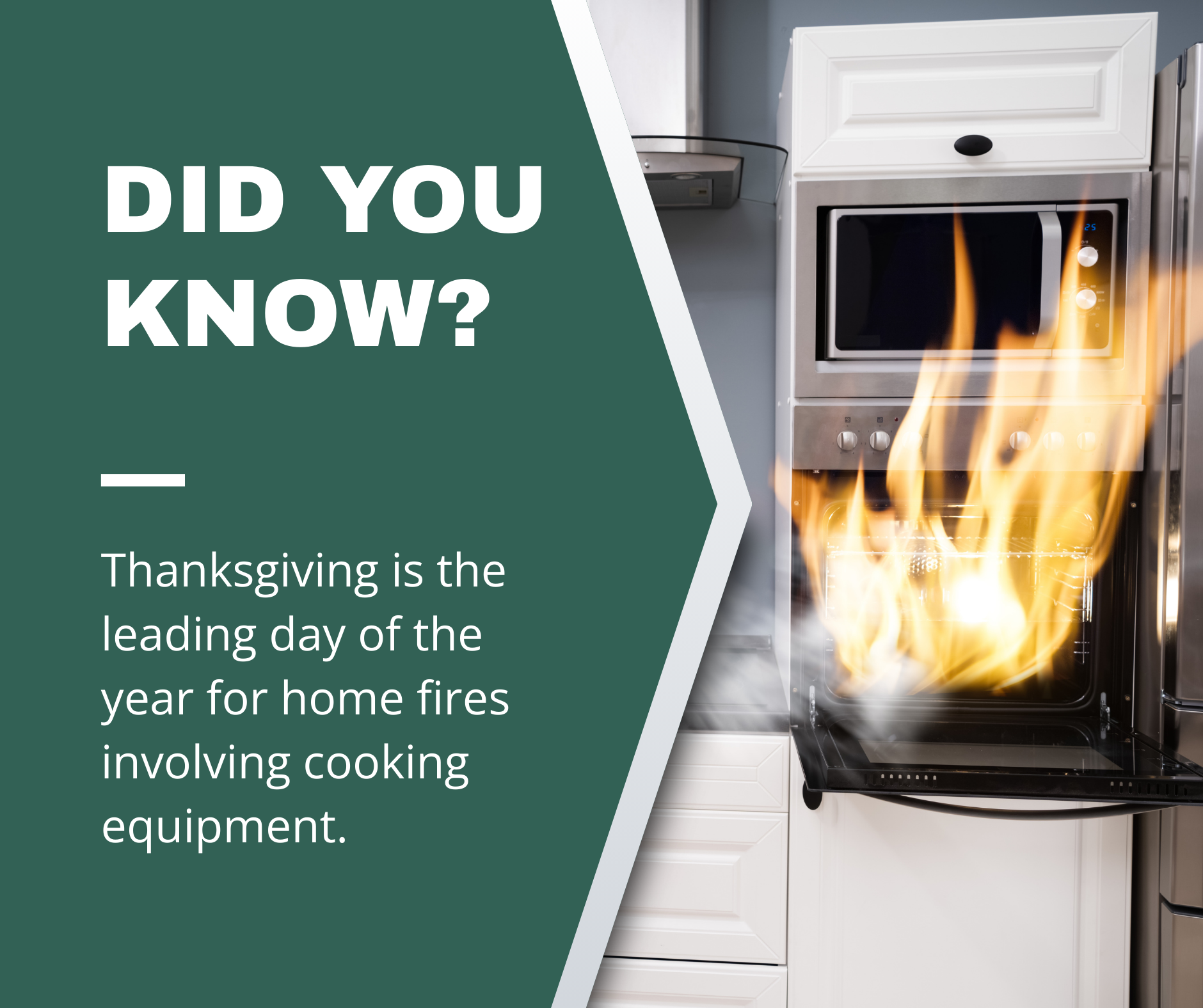
According to the National Fire Protection Association (NFPA), Thanksgiving is the leading day of the year for home fires involving cooking equipment. From 2017–2021, cooking was the leading cause of reported home fires and home fire injuries, and the second leading cause of home fire deaths. These stats are a good reminder to use caution when preparing your Thanksgiving Day feast.
Deep Frying a Turkey
You’re probably not alone if your top question now is, “Can I still prepare that tasty deep-fried turkey?” While it’s not an absolute “no,” you should be aware that turkey fryers can lead to severe burns or other injuries, and even property damage, even if you’re extremely careful. Deep-frying a turkey requires a substantial amount of hot oil which can splash, spill or combust.
Butterball offers helpful cooking and safety tips whether you’re frying indoors or outdoors. As with any cooking, don’t leave your deep fryer unattended and keep children away from the frying area. Alternatively, consider contacting your local grocery store, a specialty food retailer or restaurants that sell deep-fried turkeys so you don’t have to encounter any risk.
Kitchen Safety
With family and friends going in and out of the house, TV and music volume, and possibly alcohol, it’s easy to be distracted while you’re cooking. Below are a few quick tips for keeping you and your home safe from accidents.
It’s tempting to try and accomplish other things while food is cooking, especially a turkey that takes hours, but you should check on food frequently and never leave your home while your oven or other cooking appliances are on.
Make sure you have timers set so food doesn’t burn and potentially set off smoke alarms or worse, cause a fire. Keep the timer next to you so you don’t miss it over loud conversations or other noise.
Keep your prep space clean and organized. Oven mitts, paper towels and dish towels, food wrappers and other easily combustible items should be kept at least three feet away from heat and flames.
Don’t wear billowy clothing that could come in contact with heat and flames.
Confirm that smoke alarms have new batteries and are properly working before you being cooking.
Avoid cooking if you’re drinking heavily.
It’s always a good idea to check your homeowners or renters insurance coverage if the worst does happen and you experience a fire or related loss.
AVOIDING CAR ACCIDENTS
Drinking and Driving
This should be a no-brainer but don’t drink and drive! According to the Centers for Disease Control and Prevention, drunk driving still causes 30% of all traffic-related deaths in the U.S. If you’re planning on drinking on Thanksgiving (or any day), arrange for a designated driver or call a cab, Uber or another service to get you safely from place to place.
Be mindful of who you hand your keys over to as well. Even if you’re watching your alcohol intake, your family member offering to run up to the grocery store for the missing ingredient may not be as sober as you think. Generally speaking, it’s always a good idea to limit loaning out your car. You may be on the hook as the insured if they get in an accident.
Review Your Auto Insurance Policy Before Hitting the Road
It’s widely reported that the week of Thanksgiving is the busiest travel period of the year, with millions of Americans traveling . This means the likelihood of getting in a car crash increases exponentially. While comprehensive car insurance coverage can’t prevent an accident, it can cover costs for vehicle damage and injuries. If you’re renting a car, determine what your policy will cover or not, and consider rental car insurance if necessary.
While you can’t predict other drivers’ behavior, you can take a few steps to safeguard yourself.
Give yourself extra time. Weather is often bad this time of year and with additional cars on the road, this is a Thanksgiving recipe for disaster if you’re rushing or stressed to make up for time in snow, rain and ice.
Secure food and other items. The last thing you want is additional hazards distracting you while driving. Prevent food from sliding around and ensure everything has tight lids.
Protect your pets. If your furry friends will be traveling with you, use a strapped in harness or other safety belt to keep them in one place. If you have to brake suddenly, this can avoid possible injuries.
Pack a roadside emergency kit. This is a good idea year-round, but especially in inclement weather and times when AAA or other roadside services may take longer to get to you.
PROTECTING YOUR HOME WHILE YOU’RE AWAY
Unfortunately, the holiday season can see an uptick in home robberies. Thieves know homes are often empty for days at a time and take advantage of this. Here are a few steps to keep your home safe while you’re away:
Keep your travel plans off social media. This can be a tough one since you want to share photos and good times with friends and family, but consider waiting until you’re back in town so the wrong person doesn’t become aware of your absence.
Put your lights on a timer and use motion detectors for outdoor lights.
Get a safe for small valuables such as jewelry and family heirlooms.
Ask a neighbor or friend to keep an eye on your home and pick up any mail so it doesn’t pile up and tip off burglars.
Arrange for yard service to clear away snow and ice while you’re away so it appears someone is home.
As an added precaution, invest in an outdoor security camera that you can monitor from anywhere.
Homeowners insurance such as dwelling coverage and personal property coverage may help recover costs in the instance of a break-in. Hopefully, you’ll never be the victim of a home burglary, but you should be aware of what your homeowners policy covers and be sure to document your home inventory in advance to expedite the claims process.
Questions? Contact Wallace & Turner at (937) 324-8492 or info@wtins.com.
Hackers Don’t Knock — Protect Your Home with Personal Cyber Insurance
In today’s world, “home” doesn’t just mean four walls and a roof—it means smart devices, Wi-Fi, personal data, online banking, and connected everything. As our digital lives continue to expand, the risks do too. Cyber threats aren’t just for big corporations anymore, they’re happening every day to individuals.
Here’s why personal cyber insurance coverage matters more than ever.
The Hidden Risk Isn’t Always What You Think
Savvy homeowners know to protect their property from fire, theft and natural disasters. What often gets overlooked? Digital threats. According to the Insurance Information Institute, 75% of consumers have experienced some form of data loss or cyber-attack, and yet more than 50% of insurance agents say their clients don’t fully understand the value of cyber insurance.
Homeowners insurance traditionally covers physical damage, property liability or theft but not necessarily when your malware-infected smart device triggers a breach or hackers get into your laptop. That’s why personal cyber insurance is becoming a crucial add-on.
Growing Exposure to Cyber Crime
Digital threats aren’t theoretical. They’re happening, and they’re expensive. Three out of four consumers have had their personal information lost or stolen, and 28% of consumers have had a social media account hacked. The average payout for a home cyber claim is more than $10,000.
Your home now hosts a host of entry points for hackers: smart doorbells, Wi-Fi cameras, network-connected thermostats and even your child’s tablet. A single phishing email, ransomware incident or data breach can set off a chain reaction of fees, identity restoration and reputation damage.
It’s easy to assume cybercrime only happens to big companies or wealthy individuals, but most incidents target everyday people. Take, for example, a family whose Wi-Fi baby monitor was hacked, allowing strangers to see and hear inside their home. Or a retiree who unknowingly clicked a phishing link that wiped out their savings account in minutes. Even small events like a teen’s social media account being hijacked and used for scams can lead to legal headaches, reputation damage and financial loss.
What Cyber Insurance Covers
How can personal cyber insurance help you in the instance of a breach?
Identity theft & online fraud: Coverage for legal and financial institution fees, credit monitoring and lost wages after an identity incident.
Cyber extortion/ransomware: Services to handle ransomware attacks and recover compromised files.
Data breach expenses: Costs tied to investigating how a breach occurred and notifying impacted individuals.
Smart-home device attacks: Help repairing or replacing systems hacked via IoT vulnerabilities.
Online harassment / cyber-bullying: For families, especially, coverage can help deal with consequences of cyber-bullying or online defamation such as social media monitoring, counseling or reputation management.
Because most standard homeowners policies don’t explicitly cover these scenarios, cyber insurance often comes as an endorsement or separate policy.
Why Cyber Insurance Is So Important Now
Modern homeowners face new risks — from hacked smart devices to stolen identities — and traditional coverage isn’t always enough. Consider this:
Exposure is everywhere: From remote work to connected devices, your home is a digital hub—and cyber risk follows.
It’s not about if, but when: Accepting that cyber threats are inevitable is the first step. The right coverage helps you react, not just suffer.
The right policy matters: Every cyber policy is different in what it covers. Knowing the exclusions, and what your coverage provides, can save you headaches.
Budget-wise, it makes sense: Personal cyber endorsements can cost a nominal amount compared to what you stand to lose if you’re a victim.
What You Should Do Right Now
Ask your agent if your homeowners or renters policy explicitly includes or excludes cyber risk.
Consider adding a cyber endorsement or standalone policy if you use smart devices, do remote work, shop online frequently, or have multiple connected family members.
Review what’s covered: identity theft response, ransomware recovery, device repair or replacement, reputation restoration, etc.
Keep your digital house in order: enable two-factor authentication, use unique passwords, update firmware, and be wary of email links. Prevention is still the most effective first line of defense.
The digital world is part of daily life, but it also brings new risks to every household. Personal cyber insurance is a simple way to protect what matters most—your identity, your data and your sense of security. Having the right coverage in place means you have a partner to help you navigate the aftermath while minimizing disruption to your life.
Contact us to ensure your home is fully protected: 937-324-8492.
Wallace & Turner Supports Junior Achievement Inspire Career Fair
Wallace & Turner was proud to participate as an employer exhibitor at the Junior Achievement of the Mad River Region Inspire Career Fair, which welcomed students in grades 7–12 from across Clark and Champaign counties. With more than 60 exhibitors in attendance at the Clark County Fairgrounds, the event gave students the chance to explore a wide range of career paths and discover opportunities that could shape their futures.
JA Inspire is an experiential career-pathway program that connects classroom learning with real-world possibilities. Before attending the fair, students engage in lessons focused on career exploration and self-reflection—then put that learning into action by meeting with local employers.
We were thrilled to be part of this important initiative to educate, encourage and empower the next generation of our region’s workforce. Events like these not only help students envision their futures but also allow employers like us to connect with and invest in our community’s future talent.


